
What is Bitcoin Mining?
Bitcoin mining is the process by which new bitcoins are created and transactions are confirmed on the Bitcoin network. Miners use specialized computer hardware to solve computational puzzles, and in return they earn bitcoin as a reward.
Every Bitcoin transaction must be verified and recorded on the blockchain — Bitcoin's public, distributed ledger. Mining is what makes this possible. When you send bitcoin to someone, that transaction is broadcast to the network and grouped with other pending transactions into a "block." Miners compete to validate that block by finding a solution to a cryptographic puzzle. The first miner to solve it gets to add the block to the blockchain and earns the block reward.
This process serves two critical functions: it creates new bitcoin according to a predictable, diminishing schedule, and it secures the network against fraud. Because mining requires real energy and hardware investment, it would be prohibitively expensive for any attacker to rewrite transaction history or double-spend coins.
Think of miners as the accountants and security guards of the Bitcoin network, rolled into one. They verify that transactions are legitimate, ensure no one spends the same bitcoin twice, and maintain an immutable record of every transaction ever made.
How Mining Works
At its core, Bitcoin mining involves repeatedly hashing a block header using the SHA-256 algorithm until the result meets a specific target. Here's how that works step by step:
Block Headers and Hashing
Each candidate block has a header containing several pieces of data: the hash of the previous block, a summary of all the transactions in the block (the Merkle root), a timestamp, the current difficulty target, and a number called the nonce.
The mining software takes this block header and runs it through two rounds of SHA-256 hashing. The output is a 256-bit number — a long hexadecimal string like:
93ef6f358fbb998c60802496863052290d4c63735b7fe5bdaac821de96a53a9a
The Target and the Nonce
For a block to be valid, its hash must be below the current difficulty target. If the target is:
0000000000000a3290f000000000000000000000000000000000000000000000
then the block hash must start with enough leading zeros to fall below that number. The miner changes the nonce (and other fields) with each attempt, producing a completely different hash each time. This is essentially a brute-force guessing game — there's no shortcut to finding a valid hash.
The Lottery Analogy
Mining is often compared to a lottery. Each hash attempt is like buying a ticket. Faster hardware can try more hashes per second (a higher "hashrate"), which means more tickets and a better chance of winning. But each individual attempt has the same tiny probability of success, regardless of how many came before it.
When a miner finds a valid hash, they broadcast the completed block to the network. Other nodes verify it independently — checking that the hash is valid, the transactions are legitimate, and the rules are followed. Once accepted, the block is added to the chain and the miner receives their reward.
Mining Hardware
Bitcoin mining hardware has evolved dramatically since the network launched in 2009. Each generation brought massive improvements in speed and energy efficiency.
CPU (2009–2010)
In the earliest days, Satoshi Nakamoto and the first miners used ordinary computer processors (CPUs) to mine. This was the only option at the time, and it worked because the network difficulty was extremely low. Today, CPU mining is entirely impractical for Bitcoin.
GPU (2010–2013)
Miners soon discovered that graphics processing units (GPUs) — designed for parallel computation — were far more efficient at SHA-256 hashing. A single GPU could deliver 50–100x the hashrate of a CPU while using less energy per hash. AMD cards, particularly the Radeon HD 5870, became the standard for mining.
FPGA (2011–2013)
Field Programmable Gate Arrays (FPGAs) represented the next step. While they didn't offer the dramatic speed increase that GPUs did over CPUs, they were significantly more power-efficient. A typical FPGA miner could deliver 826 MH/s at 80 watts, compared to 600 MH/s at 400 watts for a GPU. This 5x improvement in energy efficiency made larger mining operations economically viable for the first time.
ASIC (2013–present)
Application-Specific Integrated Circuits (ASICs) are chips designed to do one thing only: mine Bitcoin. They can't be reprogrammed for other tasks. This specialization allows them to achieve enormous hashrates at relatively low power consumption.
ASICs represent the current and likely final era of mining hardware evolution. Unlike previous transitions (CPU → GPU → FPGA), there's no fundamentally different technology waiting to replace ASICs. Progress now comes through incremental improvements — smaller chip fabrication processes (5nm, 3nm) that improve energy efficiency.
Popular Miners
Below is a selection of current ASIC miners at different scales. These are examples, not recommendations — always do your own research before purchasing. Energy efficiency (J/TH) is the most important factor, as electricity is the primary ongoing cost.
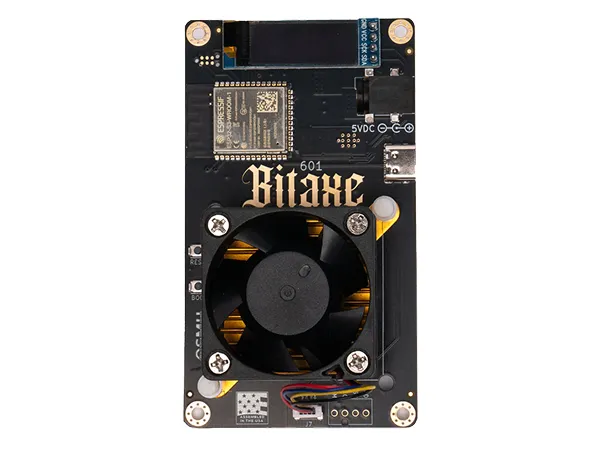
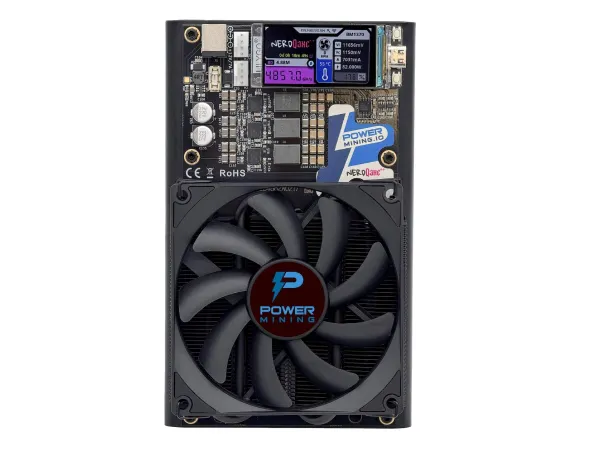
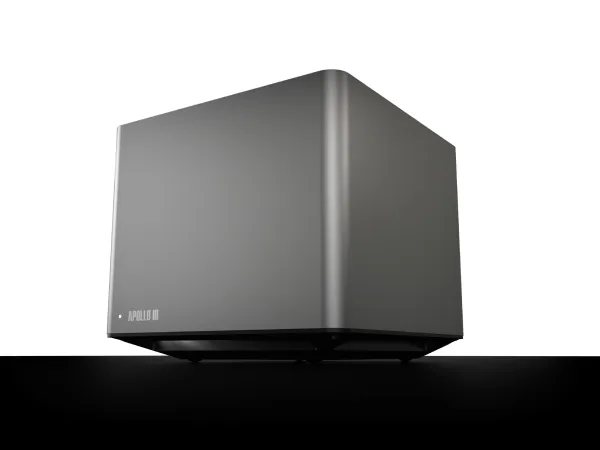
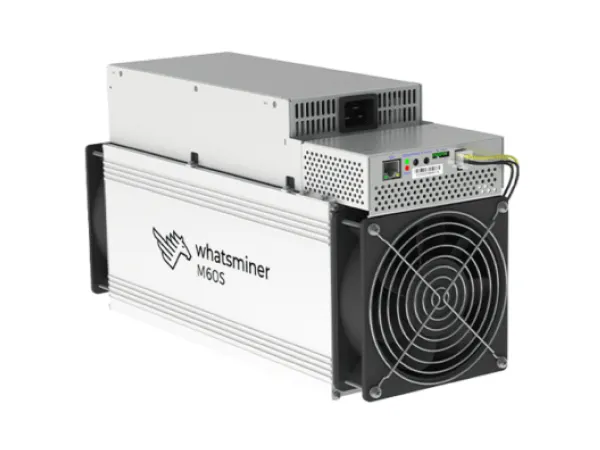
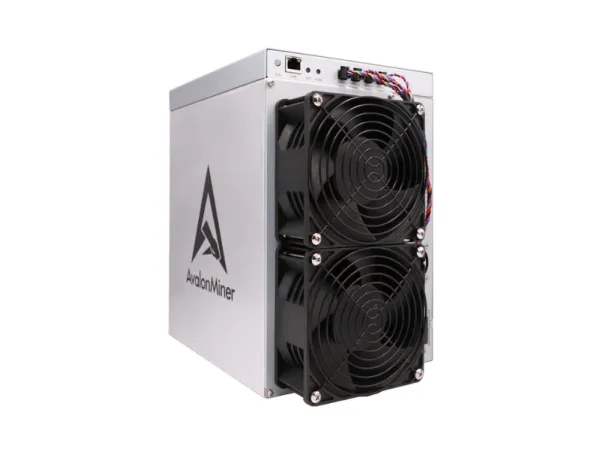
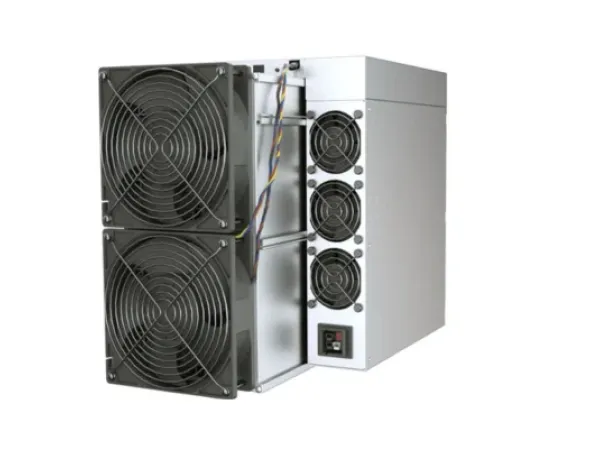
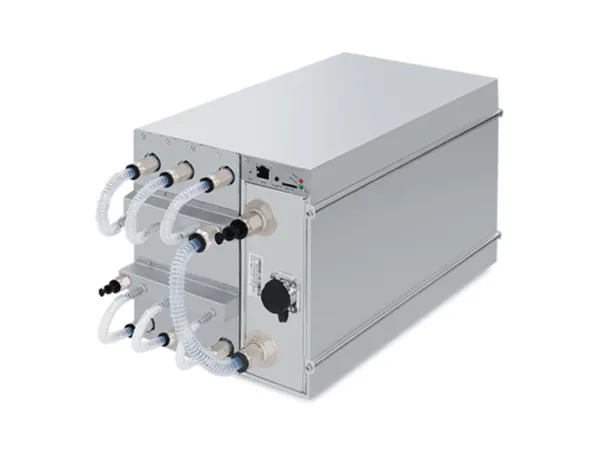
The cards above are ordered roughly by scale — from a USB-powered Bitaxe you can run at your desk, through full-size rack-mount ASICs, up to water-cooled units that need dedicated cooling infrastructure. Home miners won't generate meaningful revenue but are a hands-on way to learn how mining works and contribute hashrate to the network. Industrial miners are where the economics start to matter.
Software & Pools
Solo vs. Pool Mining
Solo mining means running your own mining operation independently. You get the entire block reward if you find a block, but with current network difficulty, a single miner could go years without finding one. For nearly all miners today, pool mining is the practical choice.
How Mining Pools Work
A mining pool combines the hashrate of many miners. When any member of the pool finds a valid block, the reward is split among all participants based on the computational work they contributed. This provides smaller, more frequent payouts instead of rare, large ones.
Pools assign "shares" — easier versions of the real puzzle — to verify that each miner is actually doing work. Your share of the reward is proportional to the shares you submit.
Payout Methods
- FPPS (Full Pay Per Share) — pays a fixed amount for each share submitted, including an estimate of transaction fees. Provides the most predictable income.
- PPLNS (Pay Per Last N Shares) — pays based on shares submitted in a window around when a block is found. Rewards vary more but can be higher over time.
- PPS+ (Pay Per Share Plus) — a hybrid that pays a fixed rate for the block subsidy portion plus a share of actual transaction fees.
Major Mining Pools
The largest Bitcoin mining pools by hashrate share include Foundry USA, AntPool, F2Pool, ViaBTC, and Binance Pool. When choosing a pool, consider its fee structure, payout method, minimum payout threshold, server locations, and reputation. No single pool should be treated as a recommendation — diversity across pools is healthier for the Bitcoin network.
Mining Software
Mining software connects your hardware to the Bitcoin network (or your pool). Popular options include CGMiner, BFGMiner, and various manufacturer-provided firmware. Most modern ASIC miners come with built-in software that you configure through a web interface — you enter your pool's URL, your worker name, and your password, and the machine handles the rest.
Mining Economics
The Block Reward
When a miner successfully adds a block to the blockchain, they earn a reward consisting of two parts: the block subsidy (newly created bitcoins) and transaction fees from all transactions included in that block.
The block subsidy started at 50 BTC in 2009 and is cut in half approximately every four years (every 210,000 blocks) in an event called the "halving." The most recent halving occurred in April 2024, reducing the subsidy from 6.25 BTC to 3.125 BTC per block. The next halving is expected around 2028.
This halving schedule means Bitcoin's total supply is capped at 21 million coins, with the last fraction of a bitcoin expected to be mined around the year 2140.
Transaction Fees
As the block subsidy decreases over time, transaction fees become an increasingly important part of miner revenue. Fees are paid by users who want their transactions confirmed and fluctuate based on network demand. During periods of high activity, fees can be substantial.
Break-Even Considerations
Mining profitability depends on several factors:
- Electricity cost — the single largest ongoing expense. Miners seek locations with cheap, reliable power.
- Hardware cost and efficiency — more efficient machines (lower J/TH) earn more relative to their electricity consumption.
- Network difficulty — as more hashrate joins the network, each miner's share of rewards decreases.
- Bitcoin price — rewards are denominated in BTC, so fiat-denominated revenue fluctuates with the market.
- Cooling and infrastructure — mining generates significant heat, and maintaining optimal operating temperatures adds cost.
Most individual miners will find it difficult to compete with large-scale operations that benefit from economies of scale, wholesale electricity rates, and optimized facilities. Before investing in mining hardware, carefully calculate your expected costs and revenue using a mining profitability calculator.
Hosted & Cloud Mining
Hosted Mining
Hosted mining (also called colocation) means you own the mining hardware, but it's housed and operated at a dedicated mining facility. The facility provides power, cooling, internet connectivity, and physical maintenance. You pay a hosting fee (typically quoted per kilowatt-hour) and keep the mining rewards. This can be a legitimate way to mine without managing the infrastructure yourself.
Cloud Mining
Cloud mining services claim to let you rent hashrate without owning any hardware. You pay upfront or on a subscription basis and receive a share of mining rewards proportional to the hashrate you purchased.
Exercise extreme caution with cloud mining. The cloud mining space has been plagued by scams and unsustainable business models. Many cloud mining companies have turned out to be Ponzi schemes that collapse once new customer payments can't cover the promised returns.
Red Flags to Watch For
- Guaranteed returns or fixed daily payouts — legitimate mining income fluctuates
- No verifiable proof of mining operations or facility locations
- Referral bonuses that form a large part of the business model
- Contracts that become unprofitable quickly and can't be cancelled
- Anonymous team or unverifiable company registration
- Unrealistically high returns compared to running your own hardware at current difficulty
If someone is offering you guaranteed profits from mining with no effort on your part, it is almost certainly a scam. Legitimate mining is a competitive, capital-intensive business with variable returns.
Proof of Work
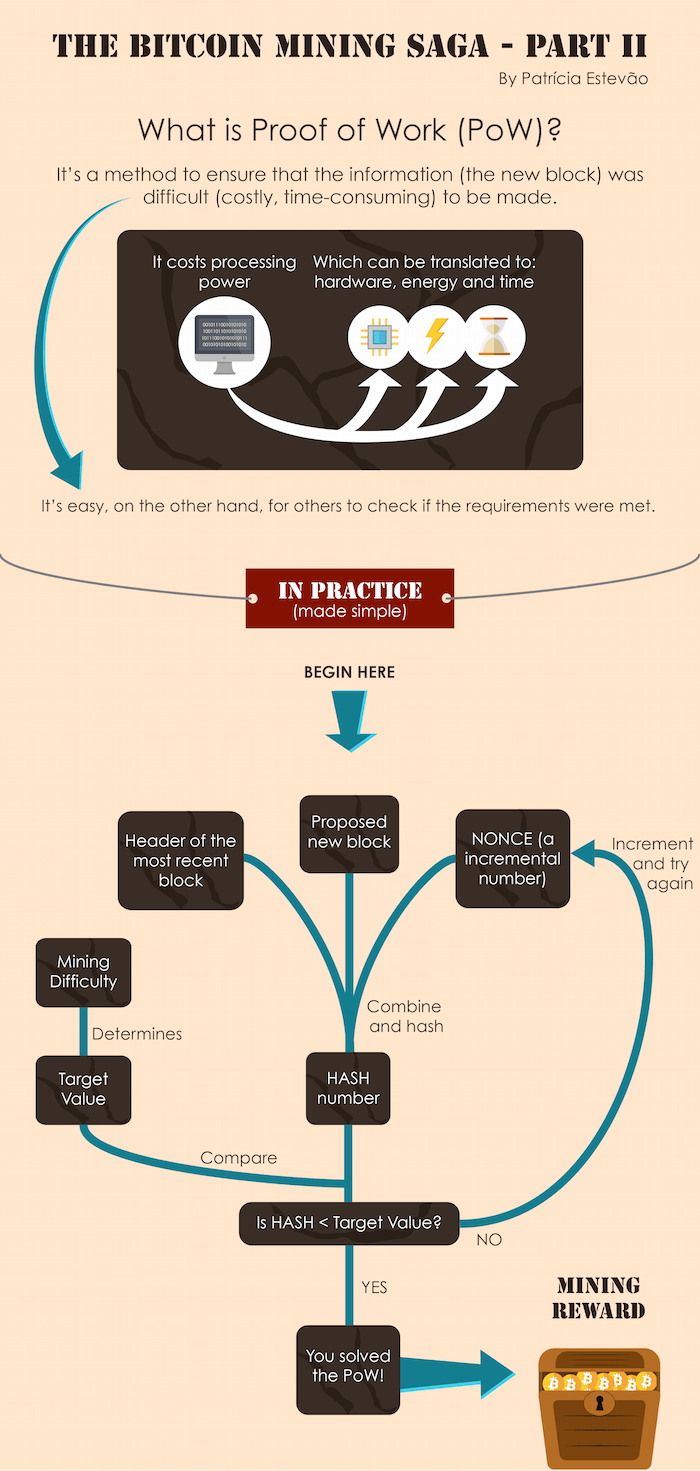
Proof of work (PoW) is the consensus mechanism that secures the Bitcoin network. It requires miners to expend real computational effort — and therefore real energy — to produce valid blocks. This is what makes Bitcoin's blockchain tamper-resistant.
The concept is straightforward: producing a valid proof of work is deliberately difficult and resource-intensive, but verifying that someone else's proof is valid is fast and easy. Any node on the network can instantly check whether a block's hash meets the difficulty target.
Why Energy Expenditure Matters
Bitcoin's energy usage is sometimes criticized, but it serves a fundamental security purpose. The cost of mining (primarily electricity) is what makes it prohibitively expensive to attack the network. To rewrite even a single block of transaction history, an attacker would need to redo all the proof-of-work for that block and every subsequent block — faster than the rest of the network is adding new blocks. With the current global hashrate, this would require an enormous and sustained expenditure of energy and hardware that far exceeds any potential gain from fraud.
In other words, proof of work converts electricity into security. The more energy the network consumes, the more expensive it becomes to attack. This is Bitcoin's fundamental security trade-off.
Mining Difficulty
How Difficulty Adjusts
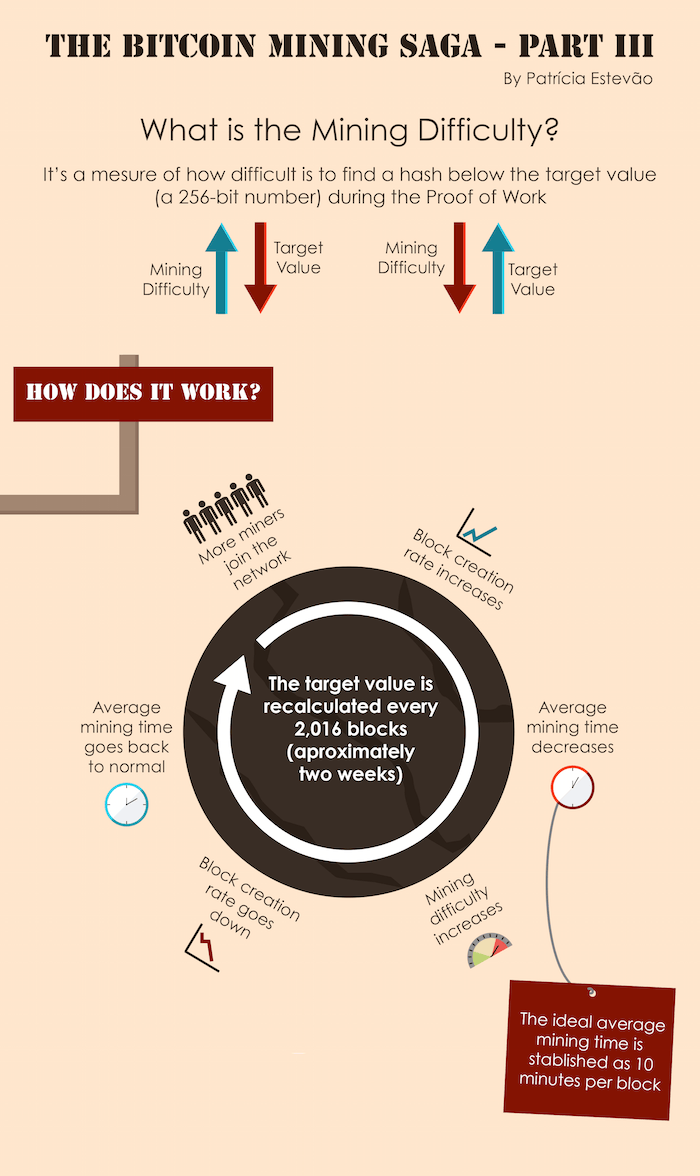
Bitcoin's protocol includes an automatic difficulty adjustment that occurs every 2,016 blocks (approximately every two weeks). The network measures how long it took to mine the previous 2,016 blocks and adjusts the difficulty target so that the next 2,016 blocks should take approximately 14 days at the current total hashrate.
- If blocks were found faster than one every 10 minutes, difficulty increases.
- If blocks were found slower than one every 10 minutes, difficulty decreases.
This self-regulating mechanism is what keeps Bitcoin's block production steady at roughly one block every 10 minutes, regardless of how much mining power is on the network.
Difficulty and Hashrate
Difficulty is directly related to the total hashrate on the network. When new miners join and total hashrate rises, blocks are found too quickly, so difficulty increases. When miners shut off machines (for example, if Bitcoin's price drops below their break-even cost), hashrate falls and difficulty eventually decreases.
Over Bitcoin's history, difficulty has followed a strongly upward trend as mining hardware improved and adoption grew. This means the same hardware earns progressively less bitcoin over time as competition increases.
What This Means for Miners
Rising difficulty reduces each miner's expected revenue. If difficulty doubles, a miner with the same hardware will earn roughly half as much bitcoin per day. This is why efficiency matters: miners with the lowest electricity costs and most efficient hardware survive difficulty increases that push less efficient operators out of the market.
Getting Started
If you're ready to start mining Bitcoin, here's a practical overview of the steps involved:
- Get a Bitcoin wallet You need a wallet to receive your mining payouts. For mining, a simple receiving address is all you need — your pool will send rewards there. See our getting started guide and wallet recommendations.
- Choose your mining approach Decide whether you want to purchase and operate your own ASIC hardware, use a hosted mining service, or (with appropriate caution) consider cloud mining. Running your own hardware gives you the most control.
- Select a mining pool Join a mining pool to receive regular payouts. Compare pools based on fees, payout methods, minimum thresholds, and reputation. Most pools have straightforward sign-up processes.
- Set up your hardware and software Connect your mining hardware to power and internet. Access its web interface to configure your pool URL, worker name, and payout address. Ensure adequate cooling and ventilation.
- Monitor and maintain Keep an eye on your hashrate, hardware temperatures, and pool dashboard. Mining is an ongoing operation — hardware needs monitoring, firmware updates, and occasional maintenance.
A realistic note: Most individual miners today do not mine at a profit. Large-scale operations with access to cheap electricity and bulk hardware purchasing dominate the industry. Mining can still be worthwhile for learning, supporting the network, or as a long-term accumulation strategy if you believe in Bitcoin's future value — but don't expect easy returns.